
Bringing Intention Forward From Another Time
Looking to a 1500 year old poem for rites of passage instruction. (Essay 3 in the series "Conjuring Rites of Passage in Their Absence")


A generous and wise elder once suggested to me, when we were discussing ancient spirit-practices of his people, that it isn’t about trying to go back and do exactly what we were doing. Most of that isn’t possible now, with all of the obligations and distractions of a modern life. But you can bring the intention of what was being done forward to the present, and begin with that.1
In a different conversation, he spoke of the importance of learning the old practices of your people, so that you are not relying on another culture who may be less separated from their own cultural practices to fill the village and ceremony-shaped hole inside yourself.
That void is part of the inheritance that we spoke of in essay 1 of this series. It cannot be filled by copying, consuming or colonizing another culture’s spirit patrimony. Bringing your rapacious hunger to bear on another culture, while starvation haunts yours is the difference between appropriation and collaboration, between grievance and grief, between child and adult, between conjuring death and conjuring life. It is the making of more holes in their culture, and in yours.
Attempting to learn the spirit and soul practices of your people from generations and centuries back, even in their most slight form, means that you will have something to bring to the feast of ceremony, to any ceremony, rite, or ritual.2
What you find in your back-looking may be tangible, or perhaps you will only be brailing the ripples of a memory of something that you didn’t experience. You may find nothing at all. But even that nothing is a treasure in itself, for it is the gateway to the grief around the sheer goneness of those practices, and of your ongoing colluding with their absence in the way you go about your daily life. Continually making this important and vital effort means that you won’t arrive at a ceremony ignorant, hopeful, and starving (a dangerous combination), with a compulsive appetite whose aim and consequence is taking in the name of satiation and comfort. That’s feasting on ceremony, rather than the feast of ceremony.
A ritual is about feeding yes, but the direction, inflection, and sequence of the eating and feeding is vital to the proceedings.
On Instruction
Earlier in this series I spoke of a culture’s stories being one place where the example, intention, and instructions around rites and ritual are cloaked to survive passage into the present day. Poetry is another delivery system for this cargo.
Friend, it’s time
Friend, it’s time to make an effort,
So you become a grown human being,
And go out picking jewels
Of feeling for others.
Through the help of holy men,
And the good that comes from waiting on them,
Hopefully your cheeks will grow pale,
And your enthusiasm for exciting life
Will get paler and paler.
This short poem from Ansari, a Sufi saint who lived and died in the 11th century is brimming with instruction around these matters.3
Let us distill its medicine together.
Friend. Opening with this supplication-toned salutation of familiarity immediately tells us a few salient things: that the dispatch is from an entity outside of the recipient, and that the tone is not adversarial. That being said, we also know from our own experience of having sat a friend down for a hard conversation, that the news on offer may not be welcome or easy to digest. But it does signal that both the intent and the instruction come from a place of consideration and care, in service to the friend. Blame, shame, and accusation are nowhere to be found.
Friend is also one of the many metaphors for God that Sufi poets employ (Beloved and Guest are other common ones), and so this greeting could also be seen as God recognizing and speaking to the divine nature of the human on the precipice of transition.
... it’s time to make an effort,
So that you become a grown human being.
This line brings us the news that a human being and a grown human being are different things, proclaiming that becoming a grown human being is not an automatic chronological reality, but an achievement of considered effort.
The recipient of this commandment is being called to account. They are not yet grown—matured— because they have yet to make an effort. This line is a divining rod of sorts—the recipient has to be mature enough to hear this admonishment as a gateway, and as something worth heeding. If they are not ready, they will hear it as a pointed spear and meet it with reactivity. The poem will go on, but their life will be held back, their growth stunted, paused, or atrophied.
Jewels of Feeling
The work of picking jewels of feeling for others describes a labour of beauty-soaked servitude, and so we know that the subject in the crosshairs of this poem is on the threshold of adulthood. In cultures that practice initiation rites, adults are made. Their adulthood is forged in the crucible of initiation rites. On the other side of that passage, their life becomes one of embodied and spiritual service—to the land, to the people, to their ancestors, and to their culture.
Other common adult stage passages such as those of parenthood and matrimony have their own work, and that work that can only be done atop the foundation of grown human. We don’t need to know the exact initiation or coming of age rites of Ansari’s culture and time to bring the intention forward from this teaching.
We notice that we’re to pick the jewels, as opposed to capture, take, or mine them. Picking requires the skill of discernment, which is a foundational quality of a grown human the world over. It leaves the parent of what is being picked intact so that what was picked may grow again. Cutting down a fruit tree to get the fruit would not be called picking. There is a symbiotic relationship needed between picker and picked for the ongoing sustenance of both parties.
Before the word jewel meant precious stone or gem, it meant valuable and precious object or treasure. Beauty and value is a throughline in both definitions—these are beautiful and valuable things that are to be picked and shared.
It isn’t clear whose feelings are attached to the precious object or treasure—the pickers? The others that they are being picked for? Both? Or perhaps the word feeling is there to ensure that it is clear that the treasures to be sought and shared are intangible but of deep consequence and affect. Here it is good to wonder about both the contagiousness and the interconnectedness of beauty, value, consideration, giving, and receiving. And it is vital that we notice that the work of a grown human is not a continued exercise in self improvement, but an edict of service, seeking, and sharing.
Holy Men
Through the help of holy men,
And the good that comes from waiting on them…
In the culture that gave birth to this poem, holy men were people with a specific function, one that we don’t currently have enmasse in modern culture. If we get caught up on surface layer literality, there is nothing here for us. We think: we don’t have holy men so this doesn’t apply, or they’re talking to or about someone else. But a poem doesn’t survive for 1500 years if there is nothing relevant to the present, and while your literal mind is great for reading a map, it is of no use in engaging with a poem.
But you can employ that part of your mind to open up an etymology dictionary. If you do, you will find that the older meaning of holy is: that which is whole, and cannot be transgressed or violated, that which is conformed to what is divine.4
And then ask yourself: what is to be a holy man (or woman)5 in this culture at this time? Allow your curiosity to be open-hearted and give it free reign to seek from a place of wonder. No matter where your curiosity takes you, we can agree on a few tenets:
Holy man is not a title that is bestowed upon a young human. A holy man is steeped in years.
It’s not easy to become a holy man, and so it is not an automatic designation. Nor is holy man a self-designated title. Holy man is an identity that is granted by the more-than-human-world, and then recognized, employed, and sustained by the people around them. A person who refers to themselves as a holy man is one to steer clear of.
A holy man has a strong and devoted connection to spirit and soul, and to the Gods of their time and place.
A holy man has a strong ballast. They don’t take things personally—from the Gods, or from the human realm— and so they are people whom you approach for safe harbour or wisdom when you are in the teeth of a storm.
A holy man engages in grief, not grievance. Grief is the twin of love and gratitude, it is radiant sunlight in a darkened form. Grievance is a poison that has no light in it.
Their scars show, and their smile lines too.
When we gather in the older definition of holy to the above tenets, we remember that a holy man is a whole man, one who cannot be transgressed or violated. This does not mean that the slings and arrows of life don’t hit them, but that when they are pierced, the wound is not left to fester or spread, nor converted to blame or shame.
To me, all of this reads like the description of an elder. Not that holy man is a synonym for elder, but that the function of holy man and the function of elder share common ground, and as identities many of their facets overlap.
A holy man serves the holy, and their ecological community flowers. An elder serves their ecological community, and the holy flowers.
In this poem, holy man is differentiated from the human tasked with picking jewels of feeling. Holy men are supported by, waited on, by those who are in the life stage of picking jewels of feeling for others—that’s one connection. But the other side of that is that a holy man likely only comes out of a grown human that has picked jewels of feeling for others. A holy man is a grown human, further grown and deepened. Their old-growness sustains the jewel pickers, and in turn are sustained by them.
The Blessing of Endings
We’re arriving at the end of the poem, and being that we’re in the realm of the holy man elder, and we are being eldered by the poem, it’s not surprising that the poem ends with a blessing. Blessing your days is one facet of the work of holy man elder and their blessing is one of those jewels for you to seek, and pick, for others.
Hopefully your cheeks will grow pale…
In our death phobic and grief illiterate culture, it may be hard to hear this as a blessing at first pass. But the fear of death is not a universal notion in this world. Cultures that have a strong connection to their ancestors and to the land they live and die on tend not to see death as the opposite of life, but as the unwavering partner of life. In these cultures, death is in service to life. This means that your death, and the rites enacted around it, feeds the land, the community, the ancestors, and those to come. You would grow up knowing this, and witnessing this knowing being lived (and died) out by those old ones around you.
In the culture of the West, our death feeds nothing—and we see to that. Physically, the food of our body is toxified through embalming or disappeared by way of cremation. Spiritually, we have been severed from our ancestors for so long that we die not knowing whom we are dying towards.
Where we used to have the feast of death rites, we now have institutionalized funerals that are consumerized, time-bound, and scripted affairs. Or we have living wakes—sad parties that overlook the major ingredient of a death rite, namely that the person who is the occasion for the gathering be dead.
Further down this dark spiral of abandonment is the entreaty gaining in popularity among European descended people dying in the new world: no service by request. This is obliteration, abandonment, and shame masquerading as consideration and humility. This is both the confession of and the deliverer of loneliness of the deepest order. It is the rupture masked as the solution.
Two of my grandparents opted for no service by request, and my heart is still broken for the nourishment that was left to spoil and for the life that was stillborn in my family line that came from colluding with that request.
In a culture that doesn’t hold death as the big bad bogeyman that is coming to get you against your will, the time of dying is another passage in the sequence of a fully grown human life. Your cheeks growing pale in the way this poem wishes for you means that the fact of your dying is not unknown, and it doesn’t arrive suddenly.
Your death is something that you are growing towards. It doesn’t mean that it is not sad, or that you won’t miss this world, and it doesn’t mean those around you won’t be sad. If you are dying in full view of your people, you will be missed in your presence while you are dying, and actively and unabashedly after you have died. These are the jewels that can only be picked in your dying time, and again, they too are for others, especially for those in your midst who are not yet dying. They cannot be found if your energy is caught up in fighting, denying, fearing, and fleeing the inevitable. If that happens, you spend your last strands of life-energy damming the river of life, and instead of jewels, you pass on heavy stones that will be carried by future generations unawares.
Your enthusiasm for exciting life will get paler and paler.
To excite something means to call to activity, to stimulate, to incite an emotional response. The modern inflection attached to the word enthusiasm has a positive feeling tone to it, but its older meaning is closer to excessive religious emotion. Broken down to its constituent parts, enthusiasm literally means being possessed by a God.
You can hear the energy and fire of unbridled and untempered youth in the above descriptions. The immature propensity for drama, self-centering, and grandiosity coupled with the inability or unwillingness to be excited by life. In youth, we insist on being the maker of and not the recipient of the bigness of life.
This poem reminds us that an elder doesn’t go around making things bigger than they are. Through the experience-worn eyes of an elder, the world is plenty big and exciting. Their proneness and incitement is towards slowness, patience, humility, grace, and deep consideration. Elders grow pale, and the bright burning fire of the village youth is reflected, tempered, and contained in the muted hues of their hearth. There is an old African proverb that brings this same teaching forward: a youth that is not embraced by the village will burn it down to feel its warmth.
To the youth in a culture with an elder function, the elders are the embodiment of scorching flame turned to warming ember. Growing old and becoming old-grown is what every youth on the other side of their coming of age passage aspires to. The youth show the elders what the shadows of the culture are, and the elders employ the bright light cast from the youthful flames to illuminate those dark corners, just as the elder that is this poem is doing for us, the youth in comparison, right now.
This is essay 3 in the series “Conjuring Rites of Passage in Their Absence”
Read essay 1 “Are Rites of Passage Possible in This Culture at This Time?” here.
Read essay 2 “Clarity of Language; On Rite, Ritual, Passage, Milestone, and ‘Right of Passage.’” here.
In essay 4 of this series, to be published Sunday, December 14th, we will contrast the foundational differences between a rite of passage in a traditional culture, and what is being offered under that same now in the modern culture of the west.
John Louie, Tla’amin Nation (in conversation)
Ceremony is a container for both rite and ritual, though it is more similar to rite, as a ceremony is what a ritual happens inside of. Unlike a rite, a ceremony does not necessarily have lineage, nor is it necessarily repeated over time. It is another word that has been de-toothed by the modern culture, as in present time it is usually applied to describe a scripted event (think of a wedding ceremony), and not a living and wild act of conjuring, which that event would have been when a culture was still ceremonially and ritually literate.
This poem was translated into English by American poet and mythopoetic men’s movement pillar Robert Bly. Mr Bly’s fascination with the very things that this essay is discussing: ritual, myth, grief, initiation and rites of passage means that the words he chose in his translation are likely to skew in that direction, for all translation involves an element of subtle and nuanced choice. To some people, the ones who fly the translation is treason flag, that would disqualify this poem. To me, this means that we are working with the collaborated and collected wisdom of both Ansari and Mr Bly with this version of this poem.
The inflection of the word cannot carries a lot of weight here. Through an institutionalized Christian lens (the main lens of the culture of the West), this definition reads as a command: It is forbidden to transgress that which is holy. But dictionaries don’t command, they expand. When we remove the credal lens, we learn: that which is holy is incapable of being violated or transgressed.
I don’t think holy men means male, especially in our modern translation as we focus on bringing the intention forward. Reading holy men as male in a mystic poem is bringing the hammer of literalism to the feather of poetry and that doesn’t serve us or the poem. I won’t keep adding woman in brackets; I trust you can imagine the bigger picture in your reading from here, should you choose to do so.
Upcoming Offering:
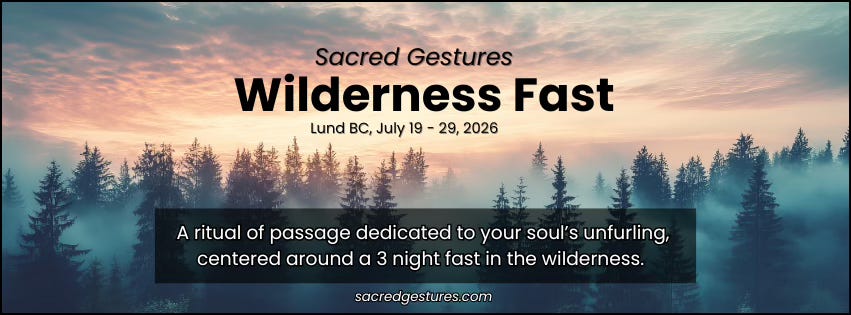
More information and application at sacredgestures.com